B2B

Saas

Web app

Digitizing a process that couldn't be simplified, only translated. 

How I translated a legally-mandated, 6-month fraud investigation workflow into a platform 30+ analysts actually wanted to use.

Role

Product Designer. End-to-end.

timeline

12 months

Team

PO + Tech Lead + 15 devs

impact

4000+ cases centralized. Reduced information loss.

Montse

Montse

context

Quálitas’ fraud team investigates potentially fraudulent claims through a complex, multi-step process handled by a team of 30 analysts, administrators, and field investigators.

The process was entirely manual, managed through emails, calls, messaging apps, shared drives, and Excel. This made investigations slow, hard to track, and prone to cases being lost, resulting in financial losses.

Some tools formerly used during investigations

Discovery

With 4,000+ cases and no system to track them, analysts didn't know what to act on next.

The workflow was long and complex, and with a small team handling thousands of cases, analysts had no reliable way to know which case required action at any given time.

Analysts need clarity to know when to act, so investigations can be completed faster.

KEY INSIGHT

My role

I owned the end-to-end design process, from discovery sessions with analysts to final handoff.

I worked alongside the Product Owner and the Tech Lead on product decisions and definition.

Constraints

Working within boundaries

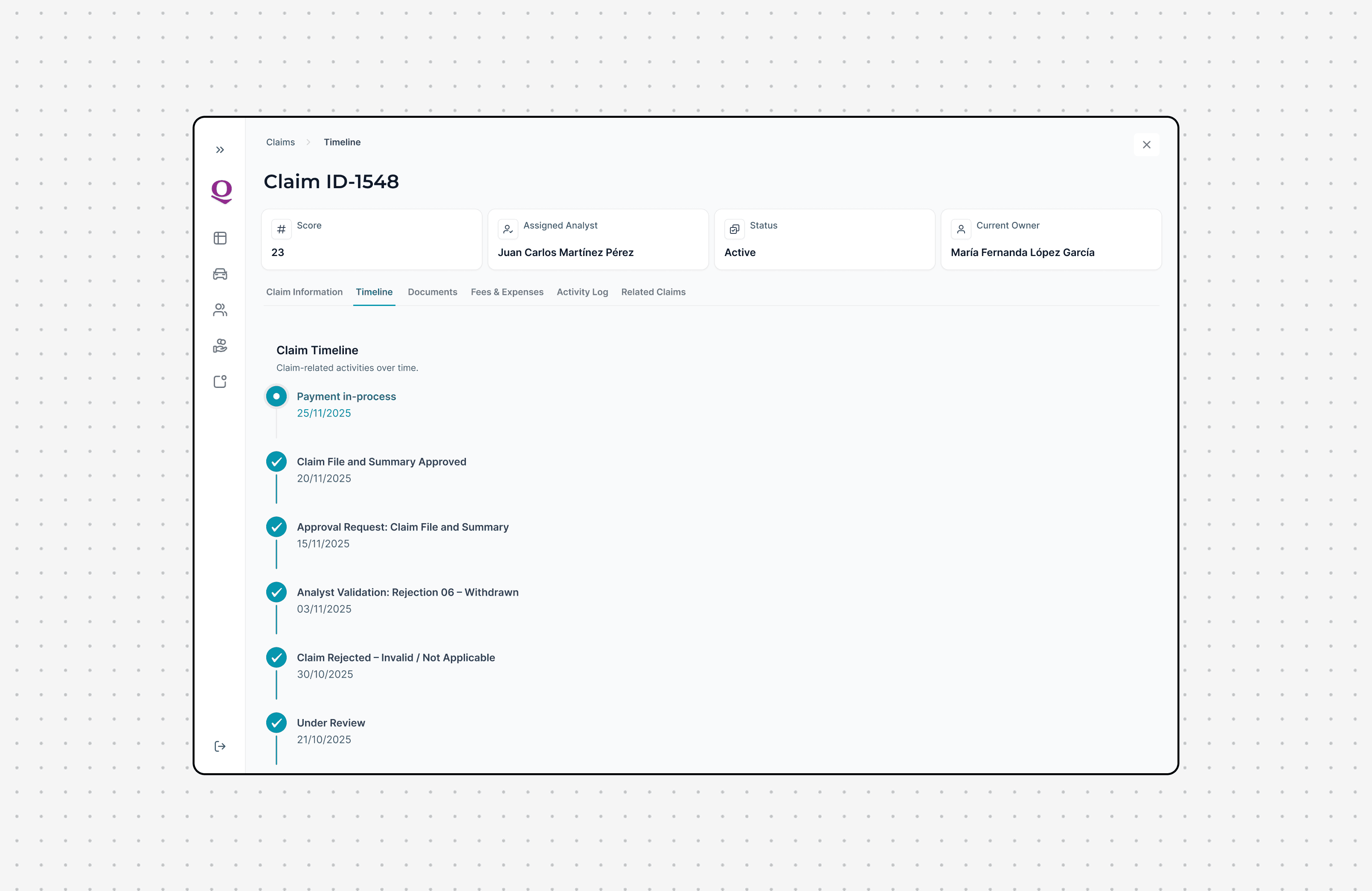
The workflow was legally mandated and it had to live in the platform exactly as it was defined.

While some steps could have been simplified, the investigation team was clear that, preserving the workflow was critical for adoption. Analysts needed to trust that the system reflected how they already worked.

The workflow was legally mandated and it had to live in the platform exactly as it was defined.

While some steps could have been simplified, the investigation team was clear that, preserving the workflow was critical for adoption. Analysts needed to trust that the system reflected how they already worked.

The 12-month deadline forced tradeoffs: modals over full pages, speed over flexibility.

To move faster, I worked with the Tech Lead to design actions in modals instead of full pages. This reduced the number of screens and sped up delivery, even if it limited flexibility and design in some flows.

The 12-month deadline forced tradeoffs: modals over full pages, speed over flexibility.

To move faster, I worked with the Tech Lead to design actions in modals instead of full pages. This reduced the number of screens and sped up delivery, even if it limited flexibility and design in some flows.

Design decisions

Three key choices

Starting with high fidelity

a

a

a

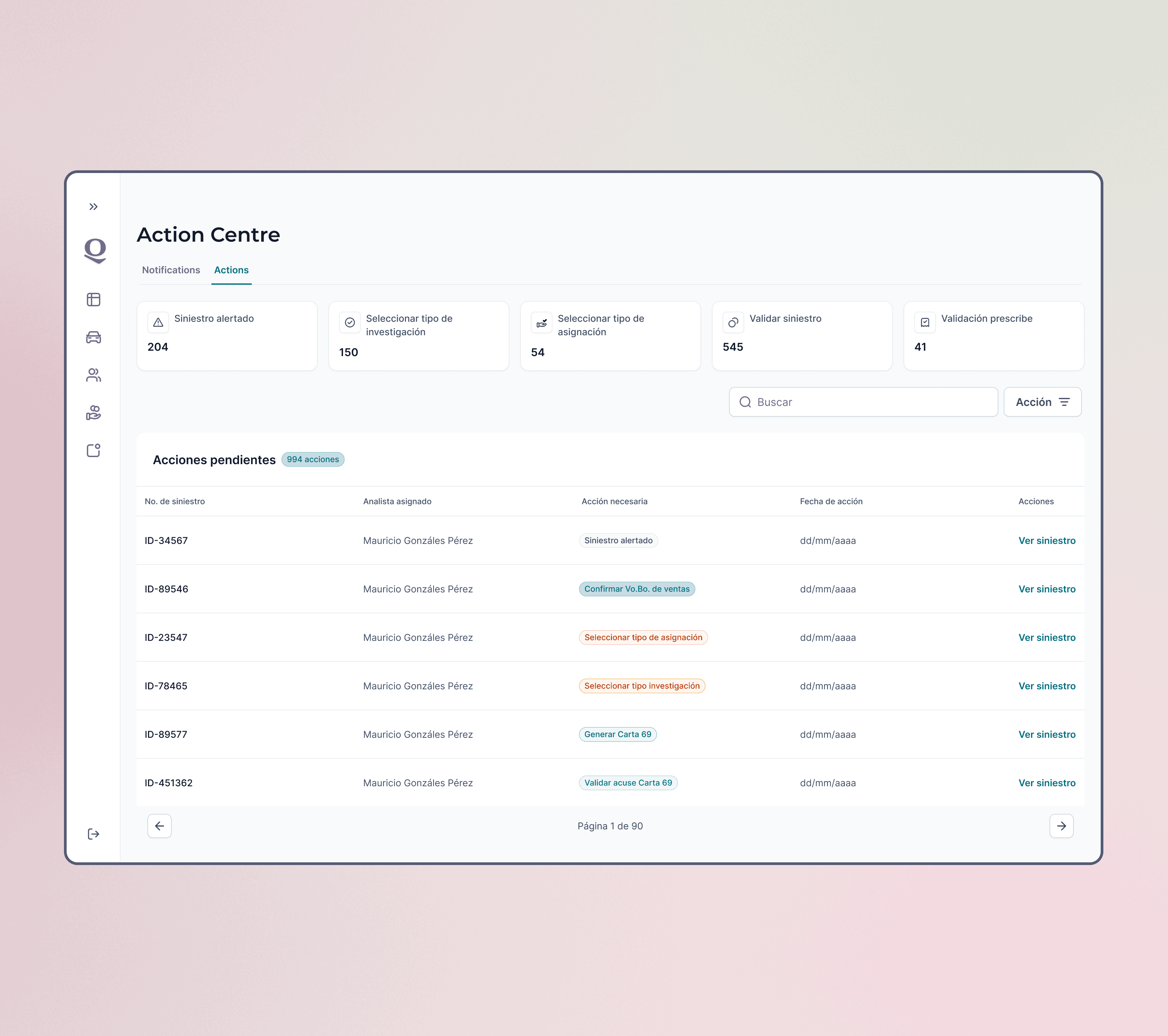
a. Action Centre

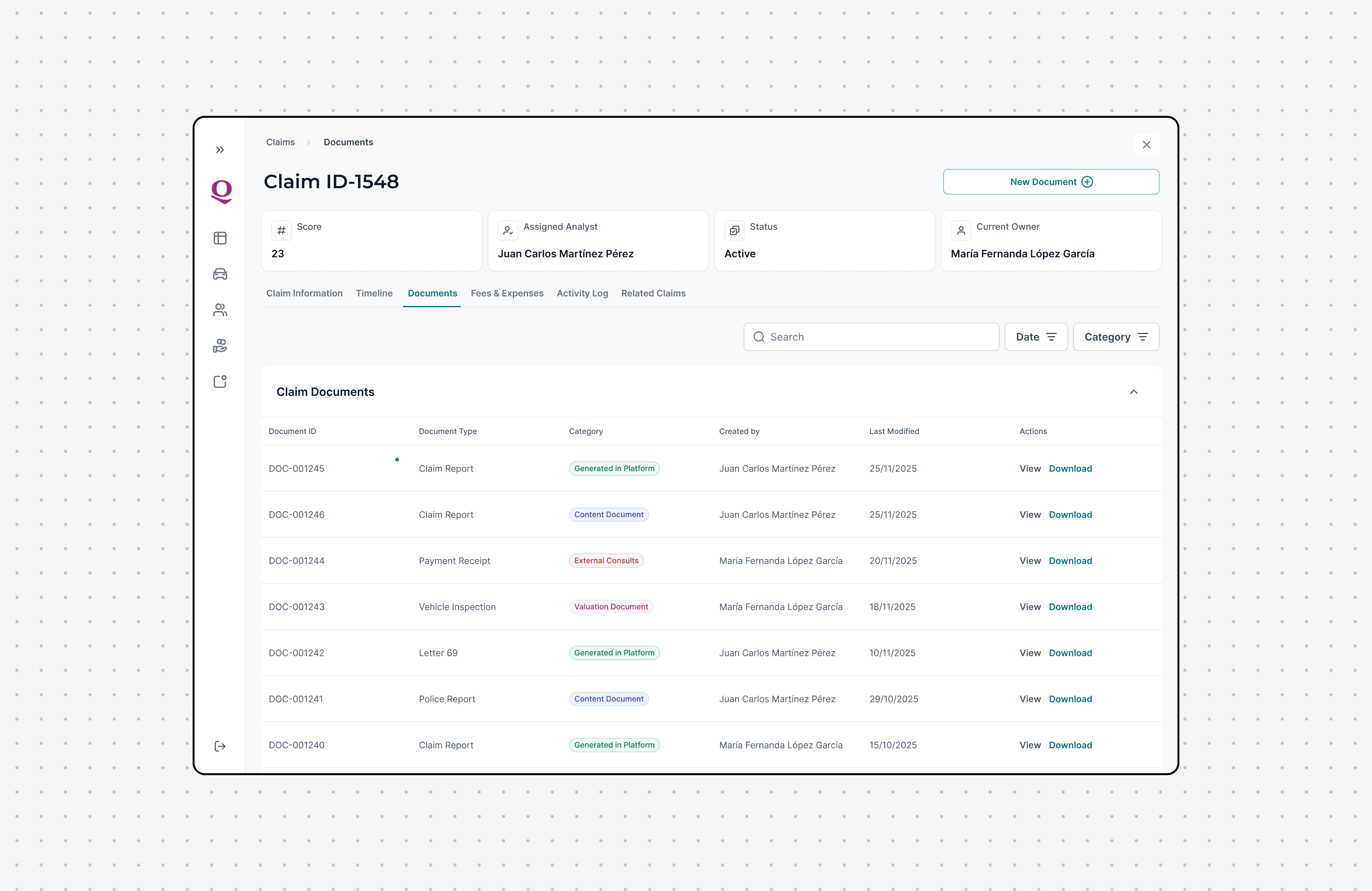
The platform couldn't expect analysts to track 4,000+ cases manually. It had to tell them what needed attention.

With thousands of active cases on the platform, a standard case list wasn’t enough to track critical cases. Analysts couldn't be expected to remember pending tasks across hundreds of open investigations.

Introducing prioritization meant analysts had to rely on the system instead of their own tracking methods, so clarity and trust became critical.

a. Action Centre

The platform couldn't expect analysts to track 4,000+ cases manually. It had to tell them what needed attention.

With thousands of active cases on the platform, a standard case list wasn’t enough to track critical cases. Analysts couldn't be expected to remember pending tasks across hundreds of open investigations.

Introducing prioritization meant analysts had to rely on the system instead of their own tracking methods, so clarity and trust became critical.

b. Skipping Lo-Fi

Skipping lo-fi was the fastest way to validate a system this complex.

With a 12-month deadline and a complex workflow, I used interactive prototyping to quickly explore and align functionalities within the platform. This approach prioritized speed over depth, but it allowed us to validate quickly.

A functioning prototype helped analysts interact with the design and test ideas early, reducing ambiguity before development.

b. Skipping Lo-Fi

Skipping lo-fi was the fastest way to validate a system this complex.

With a 12-month deadline and a complex workflow, I used interactive prototyping to quickly explore and align functionalities within the platform. This approach prioritized speed over depth, but it allowed us to validate quickly.

A functioning prototype helped analysts interact with the design and test ideas early, reducing ambiguity before development.

c. invoice system

Catching errors before they reach a reviewer requires system-wide validation logic.

Before, reimbursements for investigators were tracked through email chains and it was easy to lose the thread and delay payments. I found rejections were common, mostly from expenses exceeding approved limits.

I defined automatic validations so the system catches errors before they reach a reviewer. If an expense goes over the threshold, it's rejected immediately. Strict validations reduced errors, but also meant rejecting inputs earlier, which could feel restrictive at first.

c. invoice system

Catching errors before they reach a reviewer requires system-wide validation logic.

Before, reimbursements for investigators were tracked through email chains and it was easy to lose the thread and delay payments. I found rejections were common, mostly from expenses exceeding approved limits.

I defined automatic validations so the system catches errors before they reach a reviewer. If an expense goes over the threshold, it's rejected immediately. Strict validations reduced errors, but also meant rejecting inputs earlier, which could feel restrictive at first.

"Montse understands requirements quickly and turns complex flows into clear, functional solutions. Her strategic mindset combined with empathy and collaboration skills makes everything flow effortlessly"

Alejandra Zacarías

Product Owner at The Rocket Code

"Montse understands requirements quickly and turns complex flows into clear, functional solutions. Her strategic mindset combined with empathy and collaboration skills makes everything flow effortlessly"

Alejandra Zacarías

Product Owner at The Rocket Code

The outcome

30+ analysts migrated to one platform. Cases stopped falling through the cracks. For the first time, reducing investigation time from 6 months to 5 weeks was operationally achievable.

All cases, documents and updates were centralized in a single system, reducing reliance on scattered tools. Analysts have clarity on which cases require attention and action, which speeds up the investigation time. 

30+

Analysts, administrators and investigators onboarded

One

Platform replacing Excel, drives, emails, and calls.

One

Platform replacing Excel, drives, emails, and calls.

Zero

Information loss. Every document and update lives in the platform.

Learnings

Learning a domain fast is a design skill.

I had no background in insurance or fraud, so I worked closely with analysts to understand their process and translate it into a system they could use.

Knowing where to invest design effort

With a complex system with an extensive workflow, I had to decide what I could optimize better and what I had to make work for the first release. Understanding what to preserve was as important as what to change.

Alignment is as important as the solution

Collaboration with Engineering wasn’t always smooth. Relying only on handoffs created gaps in understanding. I learned that working directly with developers and explaining the full workflow and edge cases improved our collaboration greatly.

reflection

I’d explore how analysts actually use the Action Center over time, where cases stall, and how prioritization impacts resolution. There are also parts of the workflow that could be improved, especially where the process tightens. Due to time constraints, I focused on translating the workflow faithfully, but I’d revisit these areas to explore more flexible solutions.

Want to talk about this project or work together?

Say hello.

click to copy!

Open to mid/senior Product Design roles: remote, full-time, EU & Americas timezones

Montse Mundo © 2026

Say hello.

Tap to copy

Open to mid/senior Product Design roles: remote, full-time, EU & Americas timezones

Montse Mundo © 2026

Say hello.

Tap to copy

Open to mid/senior Product Design roles: remote, full-time, EU & Americas timezones

Montse Mundo © 2026