B2B2C
Digital Storefront
0 → 1
Designing a sales system for 5,000+ insurance agents
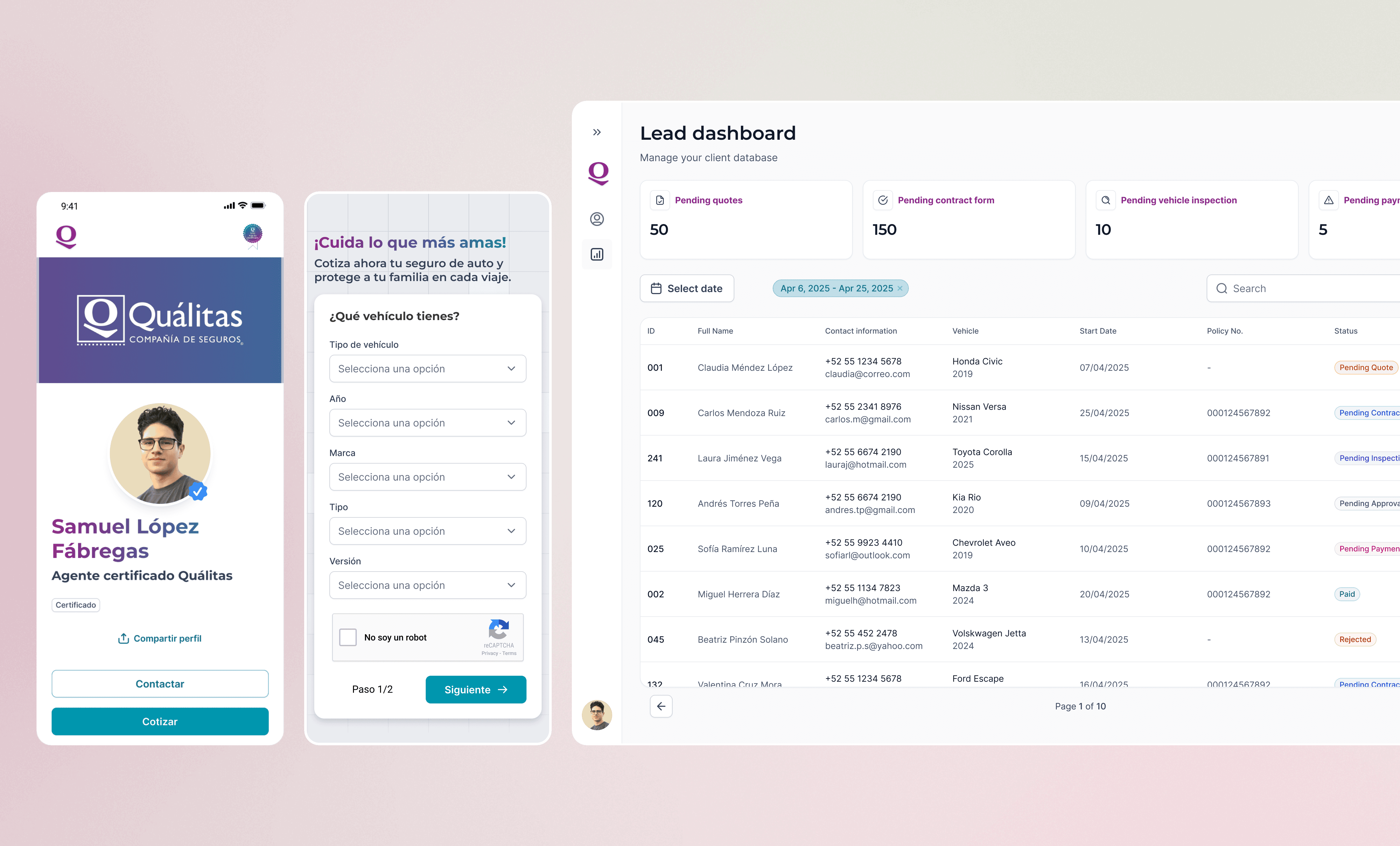
Built a connected 0→1 ecosystem (agent profiles, embedded quoting, and lead tracking) to move insurance sales from phone calls to a self-service digital flow.
Product Designer with end-to-end ownership, driving product strategy and feature prioritization alongside engineering.
Result: Agents gained full pipeline visibility for the first time. Clients can now complete a purchase without an agent on the phone.
My role
Product Designer. End-to-end ownership
timeline
4 months
Team
Tech Lead + 5 devs
impact
5000+ Agents managing their own pipeline for the first time
why did agents needed a digital sales system?
Quálitas’ sales agents sold insurance over the phone and promoted themselves on social media. This made the sales process long and uncertain for customers since there was no way to verify the agents’ legitimacy.
The initial brief was simple: create a digital space where agents could promote themselves and drive online sales. The main goal: a faster, trackable sales process.
However, this approach didn’t account for how each agent needed to sell individually, or how they managed leads.
interviews and discovery
Agents had no visibility into their pipeline and relied on manual follow-ups and phone calls.
I started with interviews with sales agents to understand their pain points. It was clear from the get-go a digital profile alone wouldn’t solve the problem, the team needed a system to sell online and track leads per agent.
I mapped the process, which revealed a key insight: every sale started with sharing, word-of-mouth, and referrals.
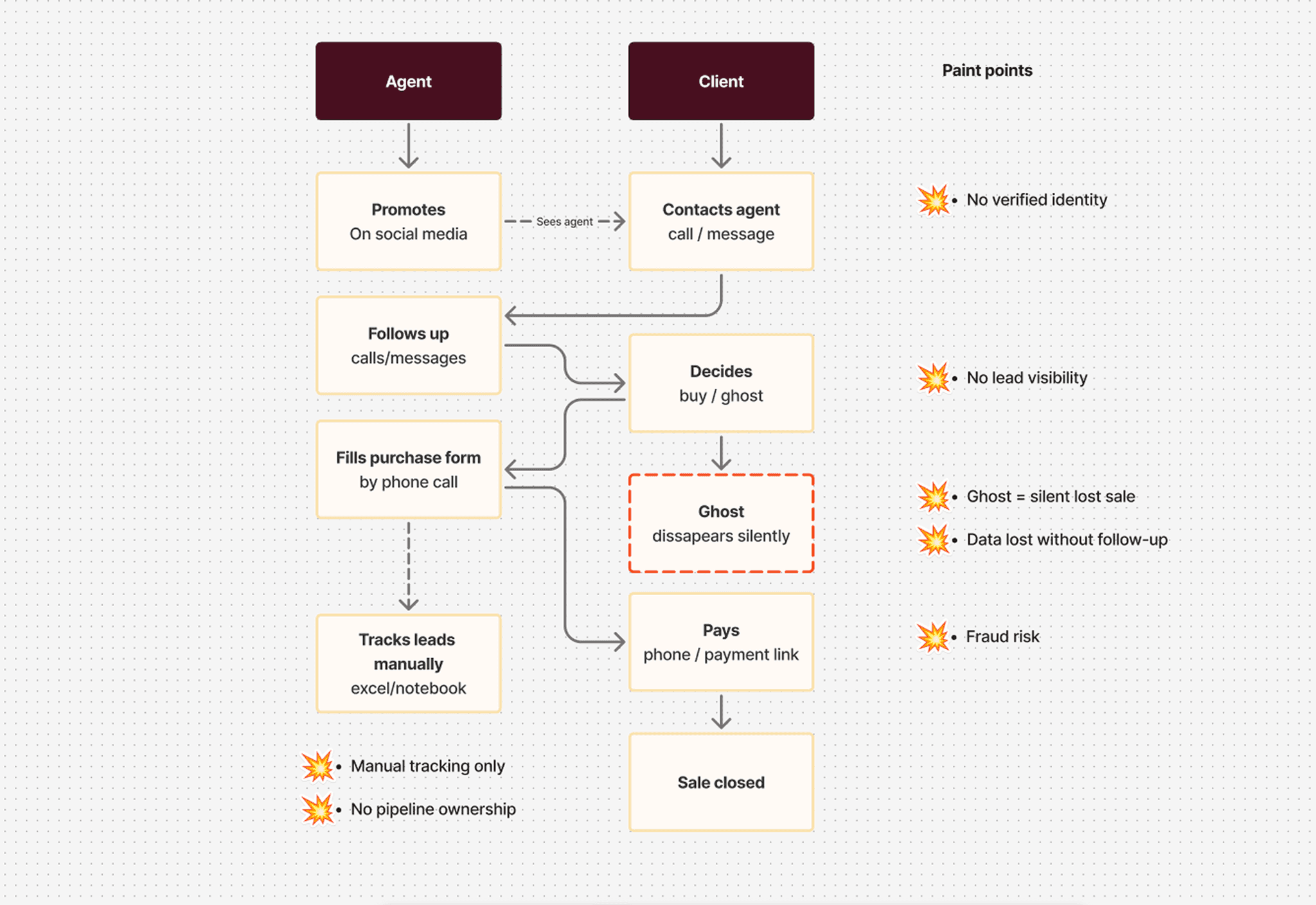
Discovery and pain points of sales process
With interviews and mapping, I identified that sharing had to be the entry point of the experience to ensure adoption, so I embbeded the quoting tool into each profile.
Embedding the quote tool into the shareable profile to give agents ownership of their leads
KEY DECISION
My role
As the sole product designer on a 0→1 project, I defined scope, prioritized features, and made product decisions alongside the Tech Lead.
I validated design decisions with real sales agents throughout the process, their feedback shaped key decisions and helped catch issues before development.
Constraints & tradeoffs
The walls I had to work around
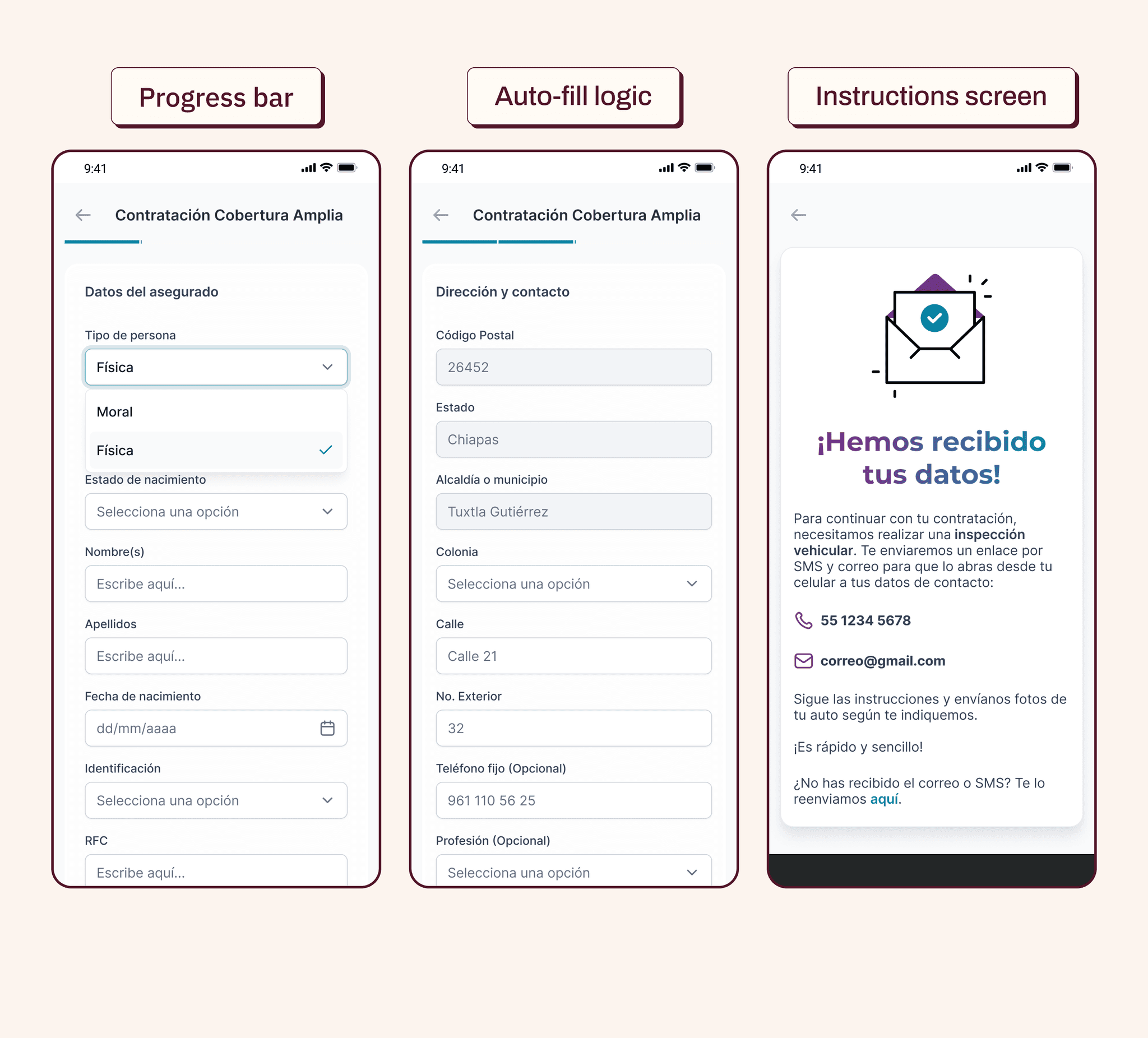
Turning an agent-led process for clients
The form was built for trained agents, not for clients completing it alone. I kept the core steps intact to avoid breaking the existing sales process, but rewrote every label, broke the form into stages, and added auto-fill logic to reduce friction at every point.
Design decisions
A connected sales system
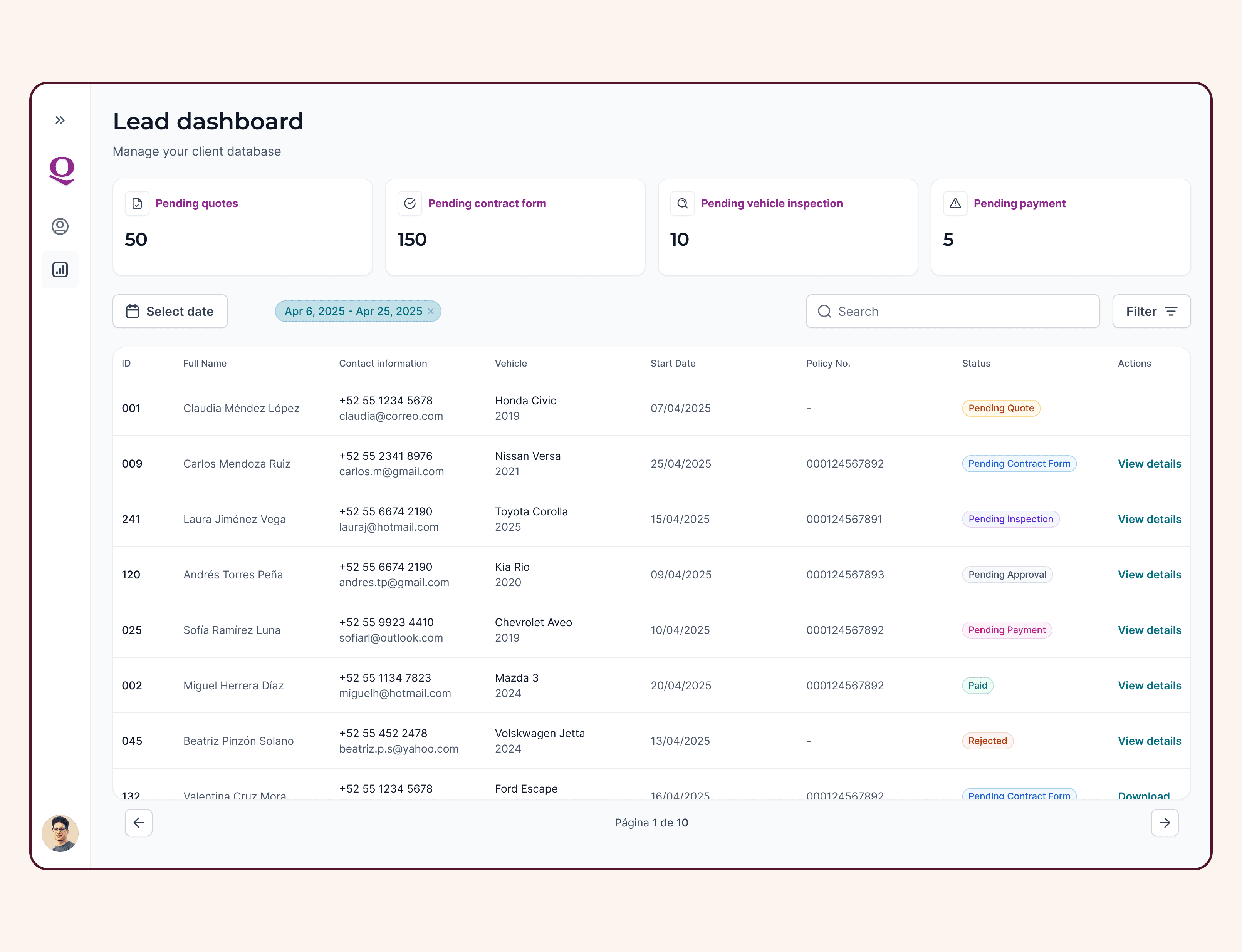
System overview: The agent shares their digital card to prospects. The client quotes and purchases insurance from the embedded quote tool. The lead is captured in the lead tracking dashboard, giving the agent full visibility into the sales pipeline.
operational impact
Agents can now manage and close sales entirely online, with full pipeline visibility, a self-service customer journey, and a system built around how they already work.
A sales system built around how agents actually work
For the first time, agents had a single connected system designed around their existing sales behavior instead of against it.
Learnings
Act fast without having all the answers
Four months to design a complex system required fast decisions with incomplete info, so I had to trust myself and communicate closely with the team.
Think in systems before thinking in features
Understanding the full sales journey first is what made it possible for me to decide what to build and what to leave out.
Final reflection
If I could continue the project I would love to explore dashboard customization and improved micro-interactions to make the experience more engaging. Also, stay close post-launch: Does the dashboard actually change how agents follow up? Where do clients drop off in the new purchase flow? and iterate to improve the product.